
Introduction:
Spinach is one of the most nutritious leafy green vegetables and is widely known for its vitamins, minerals, fiber, and antioxidants. This green vegetable is a valuable addition to a balanced diet because it provides important nutrients that support overall health, digestion, energy, and wellness. Spinach is especially popular during pregnancy because it contains nutrients like folate, iron, and calcium, which are important for the mother and baby’s health. In this article, you will learn about spinach nutrition facts, health benefits, pregnancy benefits, possible concerns, and healthy ways to include spinach in your meals.
Spinach Nutrition Facts (Per 100g Raw Spinach)
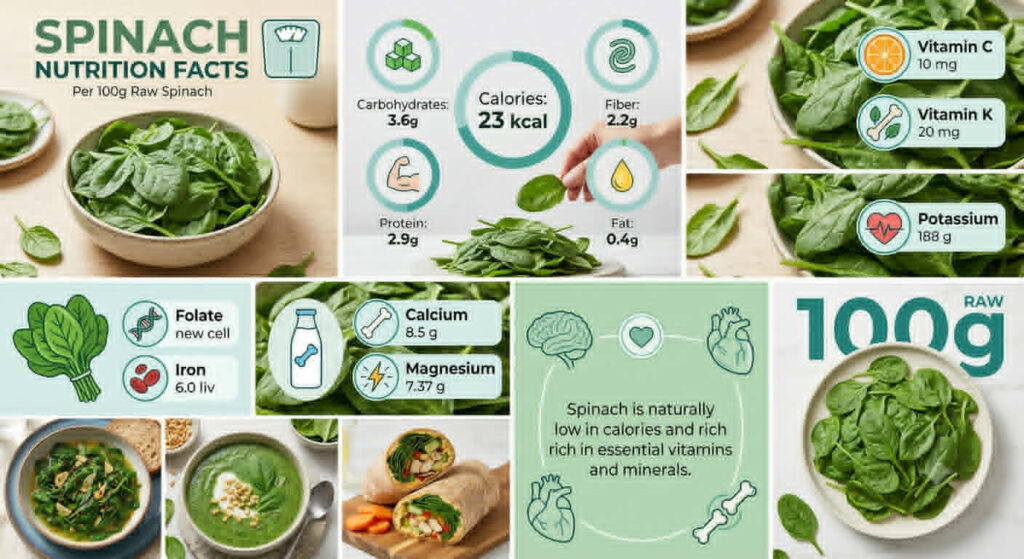
Calories: Approximately 23 kcal
Carbohydrates: 3.6g Fiber: 2.2g
Protein: 2.9g
Fat: 0.4g
Vitamin C
Vitamin K
Folate
Iron
Calcium
Magnesium
Spinach is naturally low in calories and rich in essential vitamins and minerals.
Health Benefits of Spinach
1. Supports Healthy Blood
Spinach contains iron and folate, nutrients that support healthy blood production. Including iron-rich foods in a balanced diet can help support the body's nutritional need
2. Supports Bone Health
Spinach contains vitamin K and calcium, which play an important role in maintaining healthy bones.
3. Supports Digestion
The fiber in spinach helps support healthy digestion and regular bowel movements.
4. Supports Immunity
Spinach contains vitamin C and antioxidants that help support the body's natural defense system.
5. Supports Eye Health
Spinach contains plant compounds such as lutein and zeaxanthin, which are associated with eye health.
6. Helps Maintain a Healthy Diet
Because spinach is low in calories and nutrient-rich, it can be a great choice for people following a balanced lifestyle.
Spinach During Pregnancy
Spinach can be a healthy vegetable choice during pregnancy because it provides important nutrients.
Benefits may include:
Folate to support healthy baby development.
Iron to support increased blood needs.
Fiber to support digestion.
Calcium for healthy bones and teeth.
Always wash spinach properly before eating and follow your healthcare provider's advice during pregnancy.
Healthy Ways to Eat Spinach
Spinach can be added to many meals, including:
Cooked vegetable dishes
Soups
Omelets
Smoothies
Salads
Sandwiches and wraps
Cooking spinach lightly can help make it easier to digest.

Who Can Eat Spinach?
Spinach can be enjoyed by: Children Adults Pregnant women Older adults People looking to add more vegetables to their diet.
Who Should Limit Spinach?
Some individuals may need to limit spinach depending on their health condition. Consider professional advice if you: Have certain kidney-related concerns Have been advised to monitor vitamin K intake Experience discomfort after eating spinach.
Tips for Choosing and storing Spinach
Select spinach with bright green, crisp, and fresh-looking leaves. Avoid leaves that are yellow, wilted, slimy, or have dark spots, as these may be signs of spoilage. Choose spinach with firm stems and a fresh, clean appearance. If buying pre-packaged spinach, check the expiration date and make sure the packaging is sealed and free from excess moisture. Refrigerate spinach as soon as possible after purchasing it. Store it in a clean container or a perforated plastic bag in the refrigerator's vegetable crisper drawer. Avoid washing spinach before storing it, as excess moisture can cause it to spoil more quickly. Wash it thoroughly just before use. If the leaves become damp, gently pat them dry with a clean kitchen towel or paper towel before storing. For the best quality and freshness, try to use spinach within 3 to 5 days of purchase. Following these simple tips can help keep spinach fresh for longer, reduce food waste, and ensure you enjoy its taste and nutritional benefits in your meals.